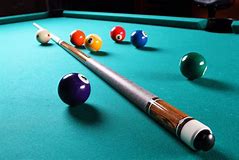
Five Things To Consider When Buying a Pool Cue

1. How to Select a Pool Cue

 There are many options to consider when you are in the market for the perfect pool cue; it can become a confusing process with so many options. In this month’s newsletter, BarStoolStats would like to suggest a number of factors to consider in helping you make the right selections in the hope that this will assist you in finding the cue that is right for you!

2. Key Components to Consider

The ultimate goal is to choose the pool cue you are going to be the most comfortable playing with. To do so there are several specific parts of the cue to consider including the wrap, the shaft and shaft taper, the Joint, cue weight, length, and the tip.

3. The Wrap

The most important aspect of the wrap or butt of the cue is that it feels comfortable in your hands. Some things to consider are the size of your hand. If you have very large hands, you may not do so well with a small diameter butt. Smaller hands will feel more comfortable around a smaller diameter grip. If you have hands that sweat profusely, you most likely should choose a cue wrapped material that is best for absorption. Those that prefer the smooth feel of a wrap leather wraps would be your best option and their many options available. However, there lots of no wrap cues available as well.

4. The Shaft

The shaft of a pool cue’s are most commonly constructed with a high grade of North American maple. Key factors in your selection is your comfort level in both the diameter of the shaft and the type of shaft taper. Most cues have a shaft diameter between 12 mm and 13 mm. What is important to pay attention to in your selection is that a smaller shaft diameter does make it easier to perform English on a cue ball, but it also can impart too much spin on the cue ball making it harder to control. 13mm is the most common size selected however, many manufacturers offer sizes in 1/4 of mm increments such as 12.25 mm, 12.5mm etc. If you have small hands, you might select a diameter smaller than 13mm so you are comfortable with your bridge hand. Find the size that you feel best with and you will have more success.

The next factor to consider is the shaft taper. This refers to the shape of the shaft, starting from the tip on back. For example, if you have a 13mm tip and a 12-inch pro taper, that means measuring back down the shaft 12-inches; it stays at that 13mm diameter the full 12-inch length before it increases size towards the joint. What should be kept in mind is; the longer the pro taper the more flex the shaft will have. A shorter pro taper will give you a stiffer and firmer hit. These differences change the way a cue will feel to you. Most cues today have a pro taper between 10 and 15 inches.

5. The Joint

The next factor to consider in your selection of a cue will be the joint. The joint is the area of the cue that connects the butt and the shaft together utilizing a joint pin. Manufactures today use many different pins for this purpose but for your selection, the two different joint types to keep in mind are; those that make contact wood to wood or make contact with a metal joint collar. They have all proven to be durable, and they all have slightly different characteristics. What to consider is that primarily a wood-to-wood joint have more of a natural softer feel to them. Cues with steel collars feel stiffer and the feedback from the cue seems a little more direct, almost quicker.

6. The Weight

The next factor is determine what cue weight is right for you. Cue weights range from 17 to 21 Ounces. There is not one correct weight for every player. For pool players though it seems cues in a 19 to 20 ounce range fit best for the style of play and the size of the balls used in pool games

7. The Length

Pool cue length is a critical factor when buying a new pool cue. It should fit with the length of your arm to provide full control. Keep in mind Standard cue lengths are 57 inches for one-piece house cues. Standard two-piece cues are 58 inches long with the butt and shaft an equal 29 inches. There are options available for players who are extra tall. Remember, a perfectly straight pool cue with a right length is key to the success of your play.

8. The Tip

Finally, the last thing to consider in your new pool cue purchase is the type of tip you want to use. A well-shaped and scuffed tip is crucial to your success with cue ball control and consistency. Tips vary in their composition relative to how hard and soft they are. This affects how the cue ball reacts as well as how long they will last. Most cues come with a tip that is rated medium to hard such.
.
As a novice player, grabbing a cue off the rack does the job. However, if you really want to improve your game, you must choose the right pool cue that you own that most comfortable for you. We have tried to provide you with some of the basic things you should keep in mind in assisting you in making an informed selection on your pool cue. Good luck!

What are the Health Benefits of Playing Billiards?

Playing billiards or “pocket pool” is an activity involving skill and strategy that many people participate in every day.  Billiards, often considered a leisure sport, has been leaning more to a competitive sport as of recent, one with many various benefits.  Whether you use pool as a leisure activity to pass the time or as a serious player aiming to take their game to the next level, the more you play the better you get.  There is a reason the saying “practice makes perfect” exists and as you practice and play, you take full advantage of the benefits the game of billiards has to offer such as improving your analytical thinking, your sportsmanship, as well as your hand-eye coordination

 Pool evolved from a lawn game similar to croquet sometime during the 15th century somewhere in Northern Europe. The first billiard room was constructed in England in 1765.  The billiard room consisted of a table with one pocket and four balls where they played “One-Pocket”.  Later in the 19th century, a “Pool room” was a betting parlor where betting on horse racing took place.  Billiards tables were installed in order to pass the time in between races.  This led to the public making the two synonymous and now the two terms are now used interchangeably.  Billiards, once considered a sport for royalty, is now an iconic part of millions of working families ‘ lives.  Due to the popularity of pool tables in various pubs and bars across the world, it has played a major factor in the social aspect of millions of people’s lives but it goes far beyond being a social, fun, and addictive game.  There have been various health benefits we will discuss below.

  1. Improves Life skills

            Various studies had proven that billiards helps build essential life skills or skill needed in day to day life.  This is especially true when starting at a young age.  Through the evolution of a game, players are constantly strategizing and planning, calculating distances and angles, determining the power and speed needed for each shot, and the hand-eye coordination to pull all that together to complete the shot as intended.

  1.  Strengthens Friendships and Family Bonds

            If you have ever played a game a pool, it shouldn’t come as a surprise to hear it is a great game to play in social environments amongst friends and family.  What may come as a surprise though is that a study conducted by the University of Copenhagen has shown that playing a few games of pool while enjoying a few drinks has been shown to slow the effects of aging in the elderly while also improving many cognitive functions.  This suggests that the social and mental stimulus provided by playing has many strong and beneficial factors.

  1.  Playable by All Ages

            Billiards is one of the very rare sports that allows play across virtually all ages.  How many other sports are there where a grand parent can actively play a game with their grand children?  While Billiards does have a pretty steep learning curve, it is also one of the easiest sports to just pick up and play regardless of age.  These factors combined with the various health and social benefits leads to pool being one of the best sports for a family to participate in together.

  1.  Aids in Mental Fortitude.

            Studies have shown that those who take part in an occasional game of pool have more honed minds and are less likely to freeze in the midst of emergencies.  The game of billiards requires many mental numerical evaluations, such as geometry, and the ability to determine exact angles and how much power to apply a mid-stroke.  These evaluations and quick decisions lead to quicker mental reactions and less freezing in the moment.

  1. Billiards Physical Benefits

            You wouldn’t think pool has many physical benefits but you would be wrong.  It is not uncommon for the average player to walk about a mile in just one game.   Also, take into account all the various stretching and bending to line up a shot just right, sometimes even balancing on one foot to make the shot.  All this aids in the toning of muscles in your legs, hips, and lower back as well as your flexibility and stability.  While playing pool would not be your first thought when it comes to exercising, but it can be a great, low impact option to stay in shape.

Get started playing billiards today. At home, at your local bar/tavern or join a sanctioned/association league in your area. See the following list for sanctioned league information. These organization will direct you to local leagues in your area:

The bar league operator and bar league sportsman needs great online tools!

BarStoolStats changes the way you collect, view and share your bar sports stats and bar sport play. Our cloud-based applications streamline the score sheet stats collection, league, and tournament operations for billiards and other bar league sports.

BarStoolStats is proud to present our curated selection of high quality Pool Equipment, Darts Equipment and Apparel. Up your game with our various brands of pool cues and darts, and our customizable Apparel.

The Future League Operator

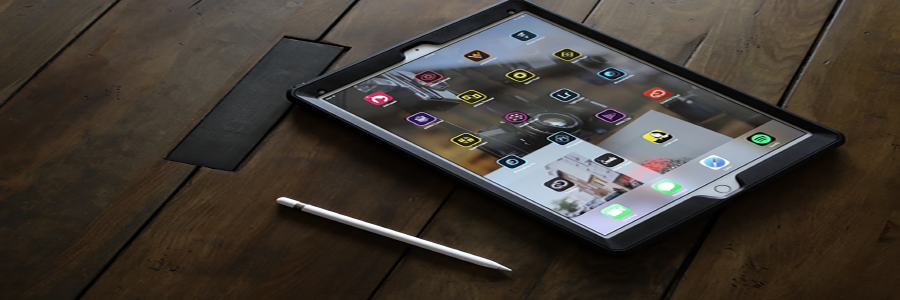
IPad Banner

Is pen and paper here to stay? Or will electronic league management take over the bar environment?

As much as I’d like to use this blog post to sell you on our electronic league management software, I would really like to dream of a future. One where the bar is integrated with the player electronically. Where pen and paper is replaced with the tablet, scores are calculated digitally and tournaments are tracked with precision and flair.

As much as we would like to see this vision become a reality, here at BarStoolStats we understand the rustic appeal of pen and paper. There’s a lot of hard work involved, but just as the quill in early billiards games was replaced by the pencil. We may be seeing a switch to the tablet in our future. This isn’t to say there isn’t an art to the quill. Just that newer technology is on the horizon.

I want to ask you, our reader, do you see the future we see here at BarStoolStats? Is this the league operation software of the future, coming to us today? I would also like to ask, where do you stand? Are you really so attached to your pen and paper, and if so, for how long will that love affair continue? These are the things we wonder at BarStoolStats, and we hope you enjoy the upcoming beta release of our application!

Try This Billiards Game to Spice Up Your League

This pool game can spice up any league, see how Honolulu can add a whole new dimension of strategy to your pool night

There’s a game out there known by many names, such as Banks, Kisses & Combinations, or Indirect. But here at BarStoolStats we prefer to call it Honolulu. In short, it’s a game where you must not use any straight in shots are absolutely forbidden!

That’s right, one can only use: Banks, Combinations, caroms/kisses, or kick shots to score points. This makes for quite a tricky game! Official rules of the BCA dictate that one must call the ball and target pocket before attempting to score in Honolulu.

The balls in Honolulu are racked on a pool table’s foot spot with a full set of 15 object balls placed in random order. On the opening break shot, the player must either call a ball out of the rack and an intended pocket, or cause two object balls and the cue ball to strike a rail. The failure to do so is a foul.

Just like in One-Pocket, if you commit a foul you will lose one point in Honolulu. This means that the previously pocketed ball must be returned the table’s surface. Such spotted balls are placed on the table’s long string as close as possible to the foot spot, and frozen or as close as possible to frozen to any balls already occupying that space in the direction of the foot rail. However, if the occupying ball is the cue ball, the spotted ball shall not be frozen to it. If a player has no balls to spot, the penalty is owed, and at the end of the player’s next scoring inning, the requisite number of balls owed are replaced